
When the Sirens Stop, the Knowledge Shouldn't.
Help me build a portable, solar-powered NOMAD kit — an offline knowledge and communications server that keeps working when the internet, cell networks, and grid don't.
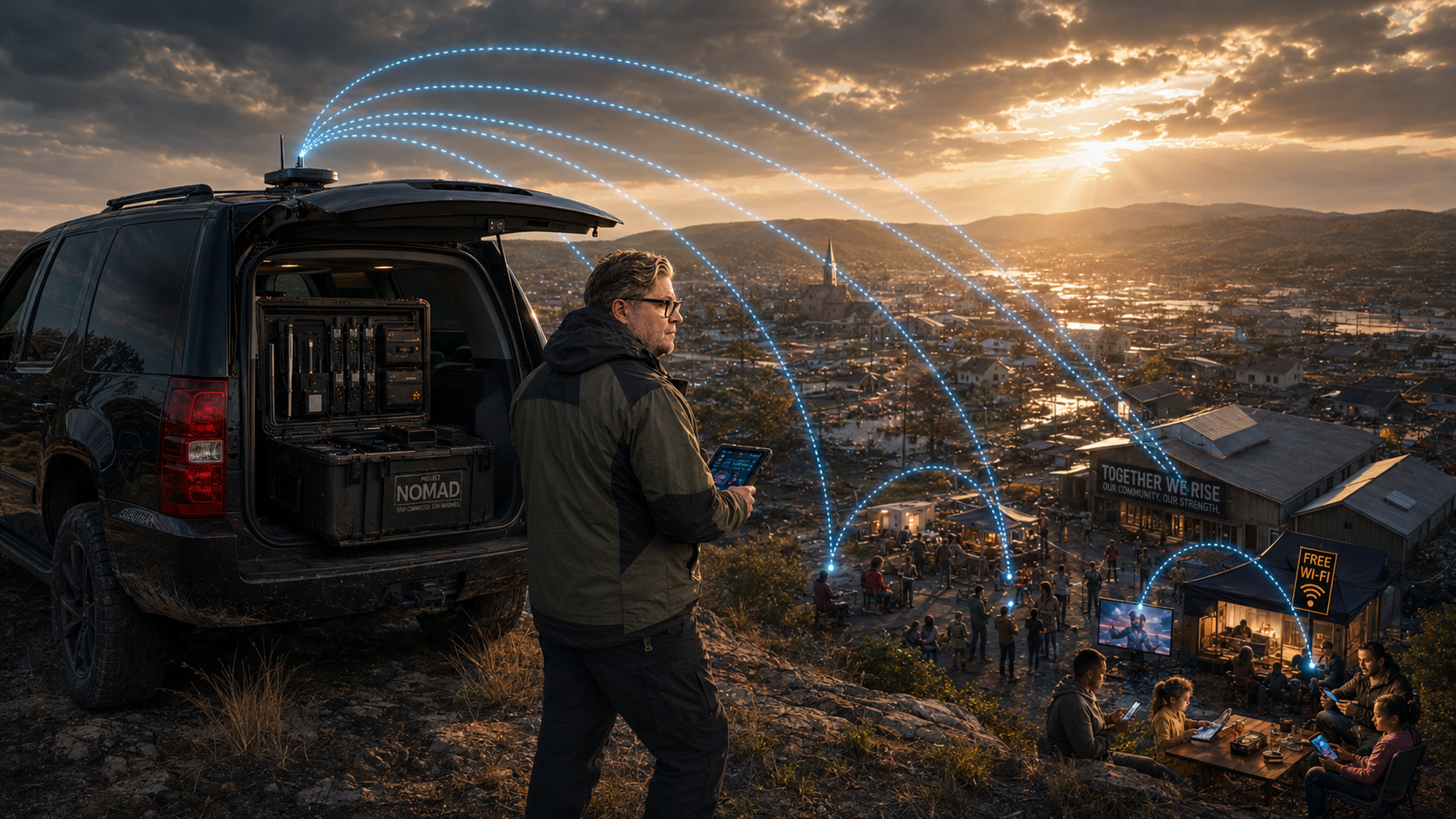
A single deployable unit can turn a parking lot, shelter, or hillside into a local hub for information, communication, and coordination — no cell tower required.
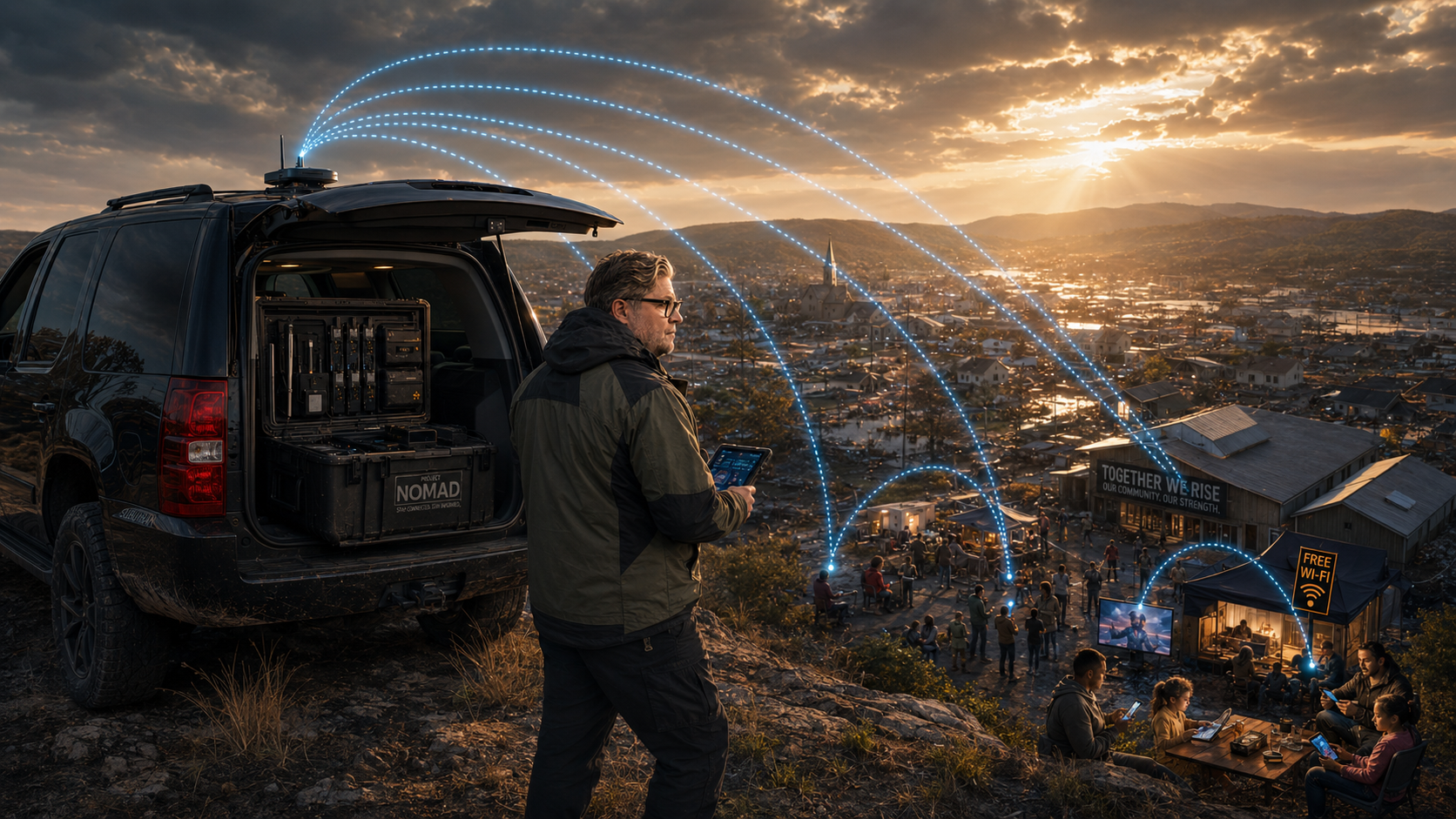
// The Reality Check
Tornado activity is shifting east into the Midwest and Mid-South. Outbreaks are getting larger and more volatile. The infrastructure we rely on is no longer a constant.
When disaster hits, the internet is often the first thing to go — and with it, first aid instructions, medication references, water purification guidance, maps, and school for kids stuck home for weeks. Project NOMAD keeps that knowledge available locally, no signal required.
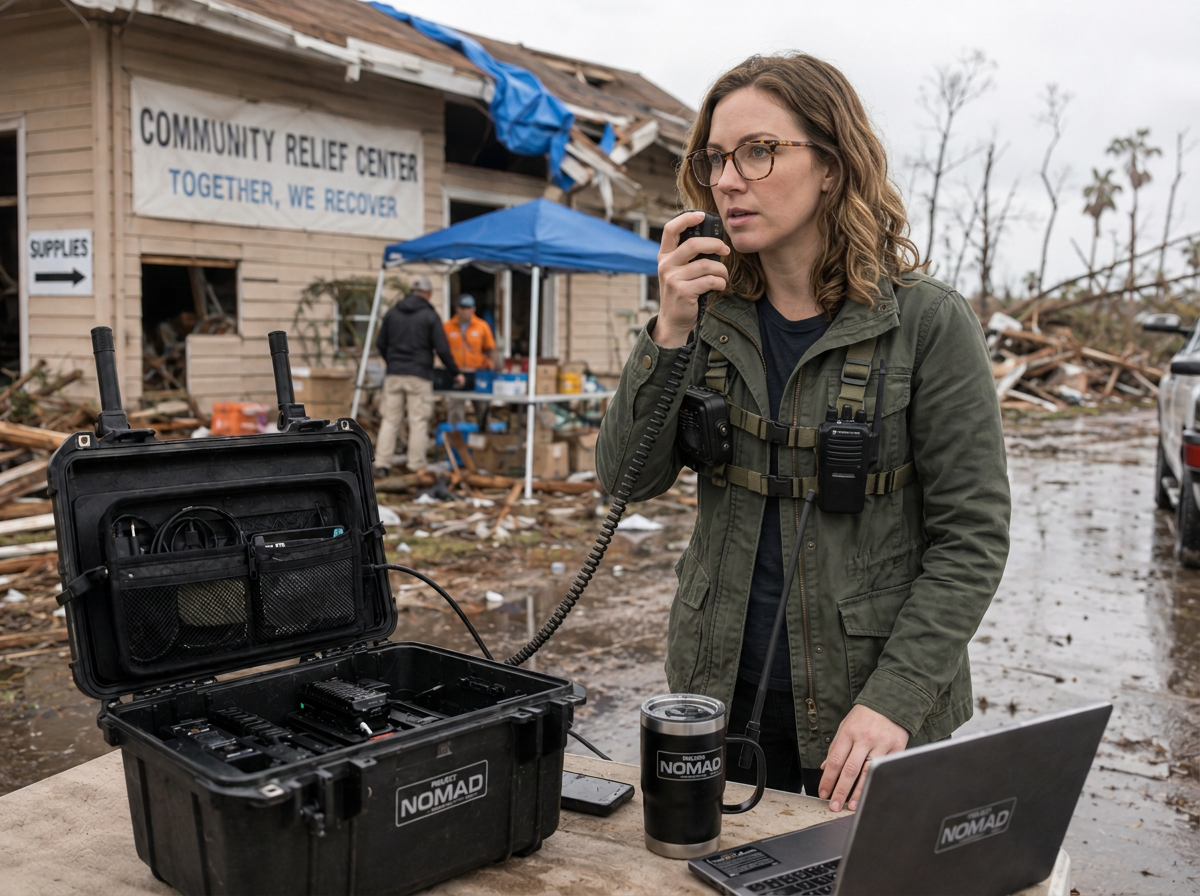
Knowledge That Never Goes Offline
Medical & Survival
First aid, medication, and emergency medicine references, alongside water, shelter, power, and practical repair guides for recovery.
Wikipedia & Gutenberg
All of Wikipedia and Project Gutenberg's library, served locally via Kiwix — millions of articles and public-domain books without a single byte of internet.
Offline Street Maps
Street-level offline maps of the region via OpenStreetMap. Navigate, plan, and coordinate when GPS apps go blank.
Education Platform
Khan Academy courses and K-12 lessons via Kolibri, so learning doesn't stop when school does — for weeks after a disaster, not just days.
Local AI Assistant
A private, LLM-driven assistant running entirely on the kit's own hardware. Ask it to find and explain what you need, no cloud required.
Hybrid Voice Comms
Push-to-talk 5G/WiFi walkie talkies — cellular when networks are up, the kit's local WiFi when they're not. Reliable voice for families and response teams.
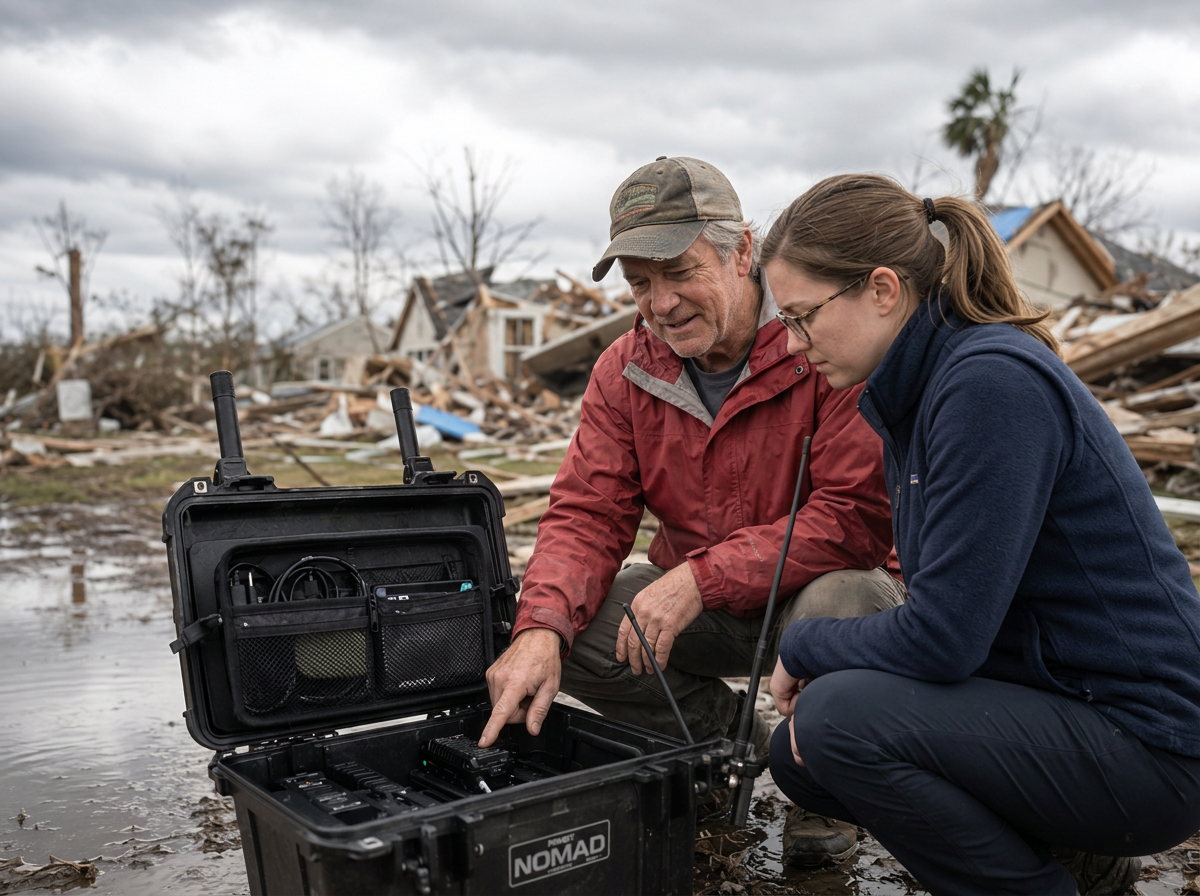
One kit doesn't serve one person — it broadcasts to every phone, tablet, and laptop that connects to it. A single unit can support a family, a shelter, a classroom, or a whole block during recovery.
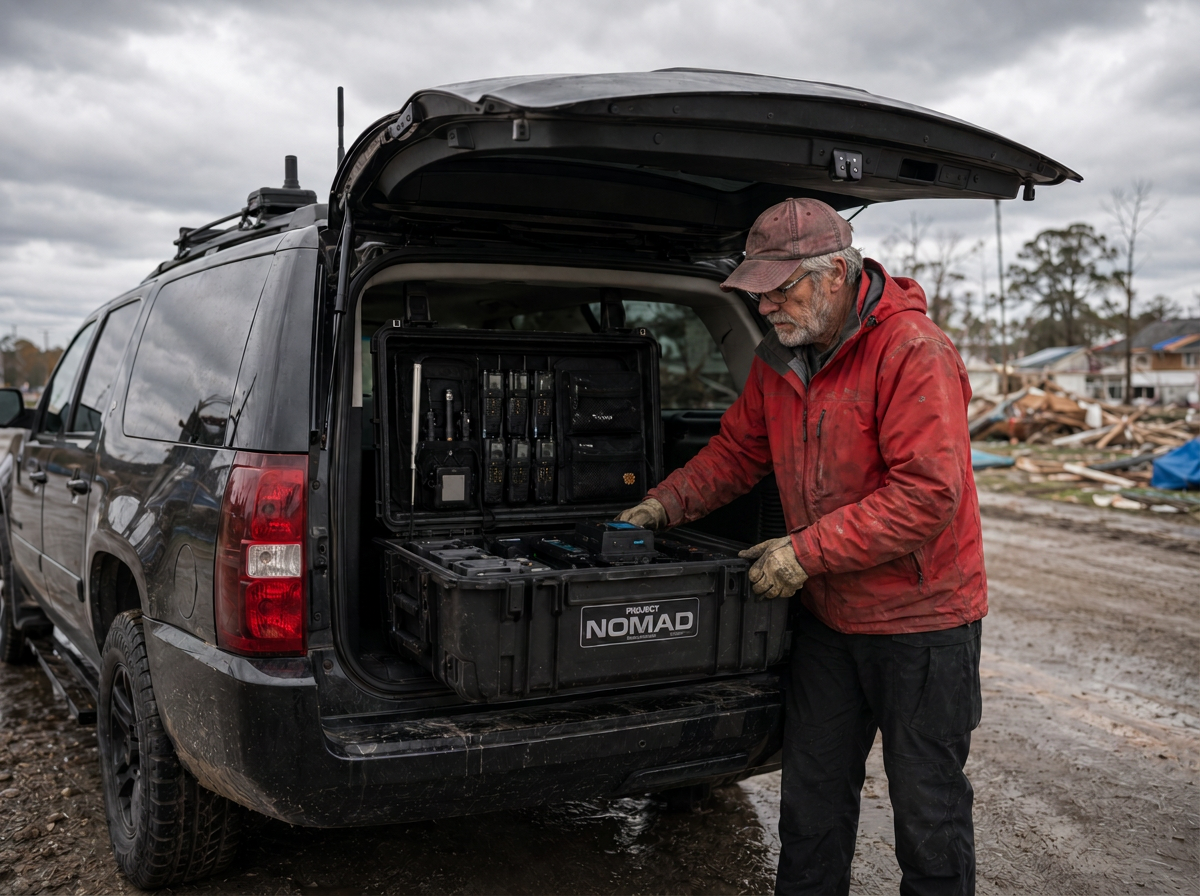
// Origins
I'm Mercer Aplin, a professor at Purdue University, and I built a career keeping complex systems running in places where the plan can change in seconds.
I teach audio technology at Purdue and spend much of my time in outdoor production: live events, touring rigs, and AV installations where weather, power, and communications don't always cooperate. Every show is a live exercise in contingency planning — you have to stay on your toes to keep everyone safe.
When I first heard about Project NOMAD, I immediately started thinking about how to scale the idea up and get it into the hands of the largest possible groups of people in need. A single box that can serve offline knowledge, maps, education, and communication is powerful; a network of them deployed across shelters, churches, schools, and response teams could change how whole communities recover after a disaster.
This first kit is a prototype. Once it's tested and proven, I want to build more on commission — tuned for families, churches, schools, and response teams across the Midwest. Your support builds the blueprint.
Kit Technical Specifications
NOMAD FIELD UNIT V1.0 · BILL OF MATERIALS
The Bigger Goal
This first unit is a prototype and testbed. Once validated, the goal is to build additional units on commission so families, schools, churches, and community organizations across the region can have their own disaster-ready kits, tuned to their needs and budget. Your donation doesn't just build one box. It builds the blueprint for many.
// Operations
How a Deployment Actually Works
The kit is designed to be carried by one person, powered by the sun, and understood by anyone with a phone. No technician, no subscription, no signal required.
Carry it in
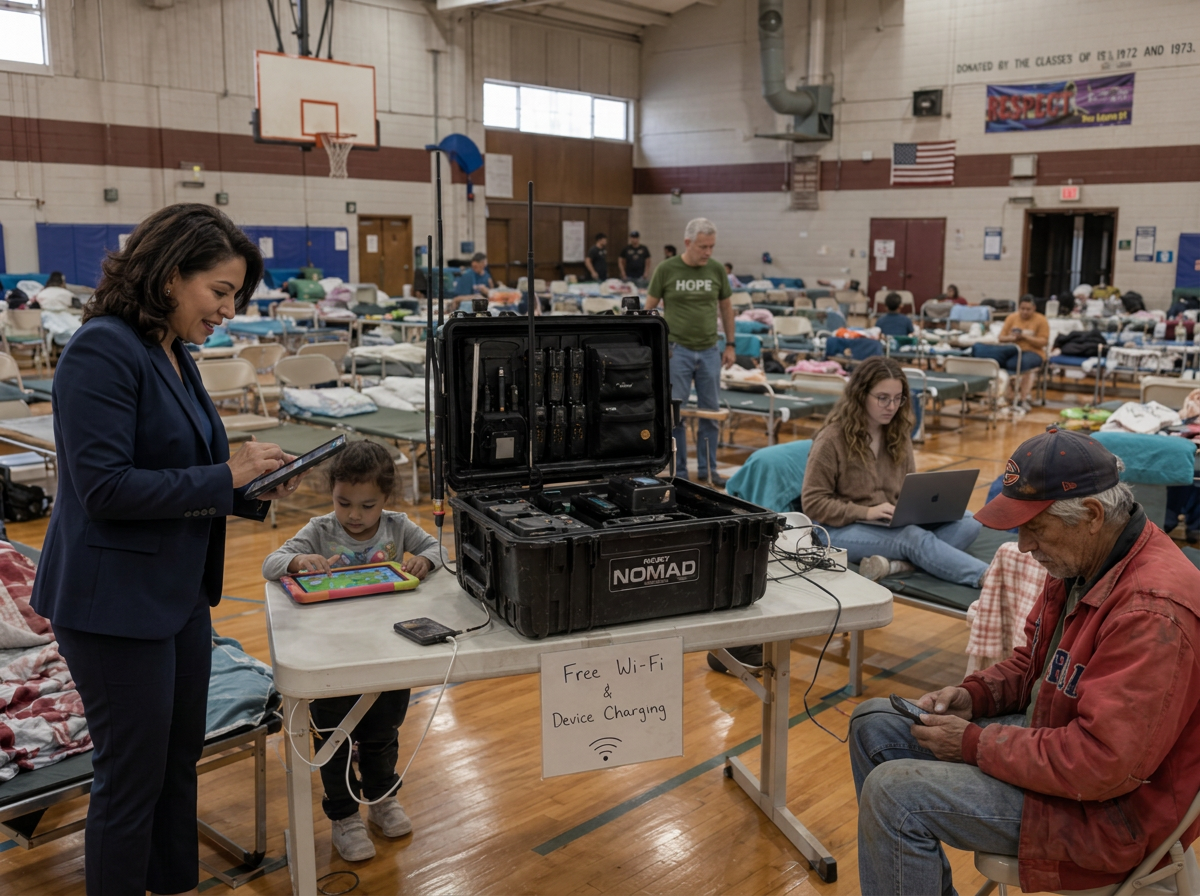
The whole system lives in a rugged transportable case. It rides in a trunk, a truck bed, or a church van and sets up on a folding table in minutes.
Power it up
Solar panels and a battery bank keep the kit running with no grid and no generator fuel. Daylight in, knowledge out, indefinitely.
Connect the block
The kit broadcasts its own local Wi-Fi. Anyone nearby joins with a phone or laptop and reaches the entire offline library — plus push-to-talk voice comms.
// Your Impact
Where Every Dollar Goes
This campaign funds one thing: the first full-scale prototype kit. Every contribution maps to a real line on the bill of materials above — no overhead, no salaries.
Buys the connectors, mounts, and cabling that hold the kit together in the field.
Funds a slice of the high-capacity SSD carrying Wikipedia, Gutenberg, maps, and coursework.
Covers a meaningful share of the solar panel and battery bank that keeps the kit alive off-grid.
Moves the rugged microcomputer — the brain running the local AI and the whole library — within reach.
// Questions
Frequently Asked Questions
What exactly is Project NOMAD?+
Project NOMAD is a free, open-source offline knowledge server created by Crosstalk Solutions. It packages Wikipedia, Project Gutenberg, medical and survival references, offline maps, and education platforms onto local hardware that serves them over its own Wi-Fi. Offgrid Knowledge Systems is building a larger, ruggedized, solar-powered version designed for disaster deployment.
How is this different from a satellite phone or a generator?+
A satellite phone connects one person to one call. A generator gives you power but no information. This kit gives an entire group of people offline access to reference material, maps, coursework, and local voice comms — and it runs on solar, so it keeps working after the fuel runs out.
Does it need internet or cell service to work?+
No. Everything is stored locally on the kit's own drive and served over its own Wi-Fi network. When a carrier signal is available, the multi-carrier router and 5G walkie talkies use it; when it isn't, the kit keeps operating entirely on its own.
Who is the kit for?+
Shelters, churches, schools, volunteer response teams, and neighborhoods recovering from severe weather across the Midwest — anywhere a large group of people loses connectivity for days or weeks at a time.
What happens after the $5,000 goal is reached?+
The funds buy the documented bill of materials and build the first full prototype. Once it's tested in the field, the plan is to publish the build so it can be replicated, and to produce additional kits on commission for organizations that need them.
Are donations tax-deductible?+
No. This is a personal GoFundMe campaign for a prototype build, not a registered nonprofit, so contributions are not tax-deductible.
Still have a question? Send a message or back the build on GoFundMe.
// Transmission
Want to deploy, partner, or learn more?
Questions about the kit, partnerships with shelters and agencies, press inquiries, or just want to say hello — send a message and I'll get back to you.
When the next storm takes the network down, let's make sure the knowledge stays on.
Whether you give, share this page, or just spread the word — thank you.
Goal: $5,000 · 100% funds documented hardware